
Jack Parrish
Airline First Officer. Boeing 767 type-rated ATP. NAFI Master CFI — top 1% of all U.S. flight instructors. FSANA Board Member. Founder of Parrish Aviation Flight Academy.
Jack built Parrish Aviation from the ground up in August 2020 with one mandate: create the flight school he wished existed when he was starting out. Today, it is the only FAA Part 141 flight school in Dallas–Fort Worth led by an active airline-background NAFI Master CFI — with on-site testing, AME, and in-house maintenance at two campuses.
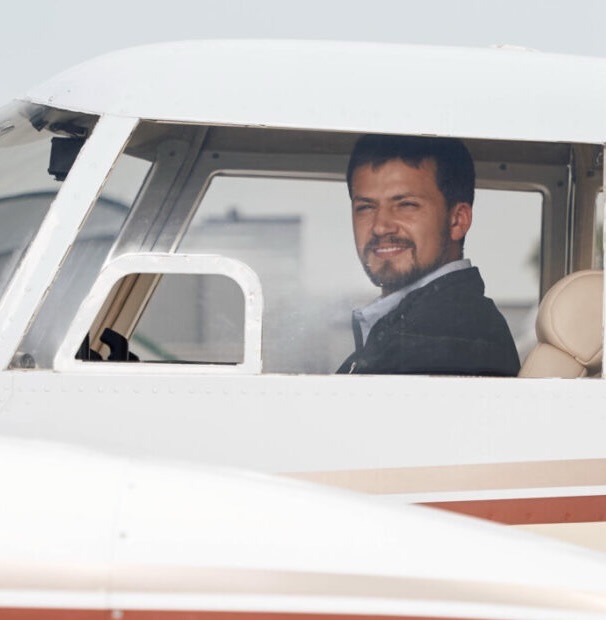
Certificates & Credentials
- Airline Transport Pilot (ATP)
- Boeing 757 / 767 Type Rating
- Embraer 170 / 190 Type Rating
- NAFI Master CFI — Top 1% Nationally
- FAA Gold Seal CFI
- Certified Flight Instructor – Airplane (CFI)
- Certified Flight Instructor – Instrument (CFII)
- Multi-Engine Instructor (MEI)
- CFI – Glider
- Commercial Pilot – Seaplane
- FAA Part 141 School Founder
- FSANA Board Member
"I built the school I wished I had when I was starting out — where the aircraft are modern, the instructors are genuinely experienced, and every resource a student needs is on campus. The goal has never changed: produce the safest, most capable pilots in Texas."
— Jack Parrish, Founder & Chief Flight Instructor, Parrish Aviation Flight Academy
From Regional First Officer to Boeing 767
Jack's airline career spans two generations of commercial aircraft — from the glass-cockpit Embraer regional jets that form the backbone of U.S. domestic aviation, to the wide-body Boeing 767 used for transatlantic and long-haul operations. That range of type-rated experience is almost without precedent among civilian CFIs running U.S. flight schools.
Regional Airline First Officer
Embraer 170 / 190
Jack flew as a First Officer on the Embraer 170 and 190 — the backbone of regional jet operations connecting mid-size U.S. markets to major airline hubs. Operating from glass cockpits at 41,000 feet, in Class B airspace, under IFR in actual IMC, Jack accumulated thousands of professional flight hours in one of the most demanding operational environments in commercial aviation. The E175 and E190 are crew-resource-management aircraft — every flight requires precise coordination between PIC and FO, rigorous checklist discipline, and systems mastery. Those habits define how Parrish Aviation trains every student from lesson one.
Type-Rated ATP — Wide-Body Operations
Boeing 757 / 767
The Boeing 767 is a wide-body twin-engine airliner capable of transatlantic flight. Type rating in this aircraft demands mastery of high-altitude aerodynamics, ETOPS operations, advanced FMS programming, and the kind of crew automation philosophy that defines modern airline cockpits. Jack holds both the 757 and 767 type ratings — certifications earned through rigorous simulator training and FAA oral examination. This wide-body systems depth is rare among civilian CFIs, and it directly shapes the avionics sophistication Parrish Aviation builds into every student's training from the earliest lessons.
Why the 767 Type Rating Matters
A Boeing 767 type rating requires FAA oral examination on aircraft systems, aerodynamics, performance, and procedures at a depth that most civilian pilots never encounter. To earn and hold this rating, Jack developed a level of aviation systems knowledge that directly enriches every advanced student he trains — from instrument rating through commercial and multi-engine. When your instructor has operated a wide-body jetliner, their standards for systems knowledge, automation discipline, and situational awareness are fundamentally different. That difference is visible in Parrish Aviation students' checkride performance.
The Path from Student Pilot to School Founder
Learning to Fly from Grandfather — Phoenix, Arizona
Jack's love of aviation didn't start in a flight school — it started in Phoenix, Arizona, in the cockpit of an Aeronca Champion with his grandfather. A seasoned aviator who owned both a Boeing Stearman and an Aeronca Champion, Jack's grandfather introduced him to flying the way the greatest generation learned it: stick-and-rudder, seat-of-the-pants, from someone who genuinely loved the sky. Jack learned the fundamentals of flight in the Aeronca, and got to experience the rare thrill of joining formation flights with his grandfather and his friends in the Stearman — a biplane built to train WWII military pilots. That early foundation — learning to feel the aircraft before learning to manage avionics — shapes how Jack teaches to this day.
Building the Foundation — Student Pilot to ATP
Jack began flight training the same way every Parrish Aviation student does — as a student pilot, learning the basics, fighting the same crosswinds and struggling with the same maneuvers every new aviator faces. That journey from student to airline First Officer informs how he teaches: he remembers what it was like to not yet understand why the aircraft does what it does, and that empathy makes him an unusually effective instructor.
Embraer 170 / 190 — Regional Airline First Officer
Jack flew as a First Officer on the Embraer 170 and 190 series, operating in the most demanding airspace in the United States. Glass cockpit. CRM environment. Class B arrivals. IFR in actual IMC. Thousands of hours of professional airline operations. This isn't background — it's the curriculum foundation. Jack teaches instrument procedures, systems knowledge, and crew discipline from lived airline experience, not from a textbook.
Boeing 757 / 767 Type Ratings — Wide-Body ATP
Jack earned type ratings in both the Boeing 757 and 767, completing FAA oral examinations and simulator evaluations for wide-body transport category aircraft. The 767 is a transatlantic airliner. ETOPS. Advanced FMS. International procedures. High-altitude aerodynamics. The systems complexity of a wide-body jet demands a depth of knowledge that most CFIs have never been required to develop. Jack has — and that depth is visible in every advanced student he trains.
NAFI Master CFI — Top 1% of All U.S. Flight Instructors
The NAFI Master CFI designation is awarded by the National Association of Flight Instructors to fewer than 1% of all active CFIs in the United States. It requires demonstrated excellence in instructional methodology, professional development commitments, a record of producing safe pilots, and a peer-reviewed evaluation process. Jack is one of a small number of NAFI Master CFIs in Texas, and the only one operating a full-time FAA Part 141 flight school in the DFW area. This credential isn't honorary — it reflects a sustained commitment to the craft of flight instruction.
Founded Parrish Aviation Flight Academy
In August 2020, Jack founded Parrish Aviation Flight Academy at Dallas Executive Airport (KRBD). Starting from scratch, he personally developed the FAA Part 141 training curriculum, assembled the modern Sling NGT and Cessna 172 fleet, recruited and trained a team of professional CFIs, negotiated FAA approvals, established the AME and PSI testing relationships, and built the on-site A&P maintenance facility. What launched in 2020 has grown into the most fully equipped flight academy in Dallas–Fort Worth — and the only one with Jack's credentials at the helm.
Expanded to Hicks Airfield — Fort Worth Campus (T67)
As demand grew, Jack expanded Parrish Aviation to a second campus at Hicks Airfield (T67) in Fort Worth — serving the western DFW metroplex, Tarrant County, and the veteran population near NAS Fort Worth JRB. The Fort Worth campus operates under the same Part 141 curriculum and instructional standards as the Dallas campus, giving students on both sides of the metroplex access to the same quality of training.
FSANA Board Member — Shaping National Flight Training Standards
Jack serves on the board of the Flight School Association of North America (FSANA) — the leading professional organization for FAA-certificated flight schools in the United States. FSANA board members help set the policy agenda for the flight training industry, contribute to safety standards and best practices, and represent the interests of Part 141 schools at the national level. Jack's board service means Parrish Aviation is connected to — and actively contributing to — the leading edge of professional aviation education in the country.
Active CFI, Aviation Writer & Mentor to Future Airline Pilots
Jack remains an active CFI at Parrish Aviation. He teaches, mentors, writes about aviation education, and consistently engages with the broader pilot training community. He has been cited in industry discussions on glass-cockpit training philosophy, FAA Part 141 curriculum design, and the veteran pilot pipeline. The future airline pilots being produced by Parrish Aviation today are trained by someone who has already sat in the seat they're working toward — and who built a school specifically to make that path more accessible.
How Jack Thinks About Flight Training
Jack's approach to flight education isn't borrowed from a management book — it's drawn from thousands of hours in professional airline cockpits and years of watching students succeed and struggle in the training environment. These four principles govern every decision at Parrish Aviation.
Train to the Standard, Not the Minimum
The FAA sets minimum standards — and many schools train exactly to them. Jack built Parrish Aviation around a different premise: train to the standard you'd want applied to the pilots flying your family. That means memorized emergency procedures, not just passing references. Real systems knowledge, not rote repetition. Precise airmanship, not approximate positioning. Every lesson at Parrish Aviation asks more of students than the FAA requires — because that's the level the airlines and the industry demand.
Instructor Quality Determines Everything
A flight school is only as good as its weakest instructor. Jack's hiring philosophy prioritizes genuine competence and genuine passion for teaching over hour-building convenience. He built the Parrish Aviation CFI team with the same rigor he applied to building the school's FAA Part 141 curriculum. Every CFI at Parrish Aviation is trained to the NAFI professional standard — not just the FAA's minimum CFI certificate requirements. Student outcomes are tracked. Instruction quality is reviewed. The culture of coaching and continuous improvement starts at the top.
Remove Every Friction Point from the Student's Path
Jack spent years watching flight students struggle not because they lacked aptitude, but because the system put unnecessary obstacles in their path: aircraft were down for maintenance. Testing had to be scheduled off-site. Medical appointments required separate travel. Study materials were sourced piecemeal. Parrish Aviation was designed specifically to eliminate every one of those friction points. PSI testing on campus. AME on campus. A&P mechanics on campus. Pilot shop on campus. The goal is a frictionless path from first lesson to checkride.
Leadership Is Demonstrated, Not Declared
Jack remains an active CFI at Parrish Aviation — not just the founder behind a desk. He flies with students, stays current on the aircraft, and maintains direct involvement in instruction quality. That visible commitment to the craft sets the tone for every instructor, administrator, and student at the school. An aviation culture of safety, precision, and professionalism cannot be mandated — it has to be modeled by the person at the top.
Media, Credentials & Community Impact
Jack's authority in aviation isn't self-declared. It's reflected in the credentials he holds, the organizations he serves, and the conversations he contributes to within the professional training community.
NAFI Master CFI Designation
Recognized by the National Association of Flight Instructors as a Master CFI — the highest civilian instructor credential in the U.S. Awarded to fewer than 1% of active CFIs based on instructional excellence, professional development, and peer review.
National Association of Flight Instructors (NAFI)
FSANA Board Member
Elected to the board of the Flight School Association of North America, the nation's leading professional organization for FAA Part 141 flight schools. Board members contribute to national policy, safety standards, and industry best practices.
Flight School Association of North America (FSANA)
Glass Cockpit Training Philosophy
Jack has contributed to industry discussions on the value of Garmin G3X training for primary students — arguing that glass-panel fluency from lesson one is now essential preparation for a professional pilot career. His Sling NGT fleet adoption at Parrish Aviation has been noted as a forward-thinking approach to primary training.
Aviation Training Community
FAA Part 141 Curriculum Author
Jack personally authored and submitted Parrish Aviation's FAA Part 141 training curriculum — a detailed, stage-by-stage program covering PPL through multi-engine and CFI tracks. The curriculum was reviewed and approved by the FAA's Southwest Regional Flight Standards Office.
Federal Aviation Administration (FAA)
Podcast & Community Engagement
Jack has participated in aviation education podcast discussions covering topics including Part 141 vs. Part 61 training philosophy, how airline-background CFIs elevate student outcomes, and the operational advantages of in-house maintenance for flight academies. His perspective as a working airline-background NAFI Master CFI running a Part 141 school is a relatively rare voice in the training community.
Aviation Podcast Community
Podcast & Speaking Appearances
Jack has contributed to aviation education podcasts and community discussions on topics including glass-cockpit training philosophy, Part 141 curriculum design, the FAA's role in flight school standards, and how airline-background instructors elevate student outcomes. If you're a podcast host, aviation journalist, or content creator interested in interviewing Jack on professional flight training, reach out directly.
Contact for media inquiries →The Parrish Aviation Lineage
Parrish Aviation isn't just a flight school — it's the latest chapter in a five-generation family aviation story that stretches from a Texas dairy farm to the cockpits of U.S. Air Force fighter jets and commercial airliners. Aviation isn't something the Parrish family does. It's who they are.
“Shorty” Parrish
The Original Parrish Pilot
The Parrish aviation story begins with “Shorty” Parrish — an Illinois farmer who took to the skies to work his dairy operation alongside his brothers. Long before the family name became synonymous with flight training, Shorty flew small aircraft to tend to his land, becoming the first in the family to understand that an airplane wasn't just transportation — it was a tool, a passion, and a way of seeing the world from a different angle. That spirit of practical, purposeful flight has carried through every generation since.

Roger Parrish
Commander, USAF Thunderbirds — 1973–74
Shorty's son Roger took the family's love of aviation to the highest level of military aviation achievement. Roger Parrish became the Commander of the United States Air Force Thunderbirds — the USAF's elite aerial demonstration squadron — serving in that role in 1973–74. The Thunderbirds represent the very pinnacle of precision airmanship and military aviation excellence. Roger's command of the team placed the Parrish name among the most distinguished in American aviation history, and set a standard of excellence that has echoed through every generation that followed.

Brian Parrish
F-16 Fighter Pilot, U.S. Air Force
Following his father Roger's legacy, Brian Parrish pursued a distinguished career as an F-16 Fighter Pilot in the United States Air Force. Flying one of the most capable and demanding multirole combat aircraft ever built, Brian brought a third consecutive generation of Parrish men into the ranks of elite military aviators. Brian now flies the Boeing 737 as a Captain for a major airline, and his sons Jack and Michael — the fourth generation — grew up with aviation not just as a career option, but as the family's defining identity.

Jack & Michael Parrish — and Thomas
Founders of Parrish Aviation · Major Airlines · SkyWest First Officer
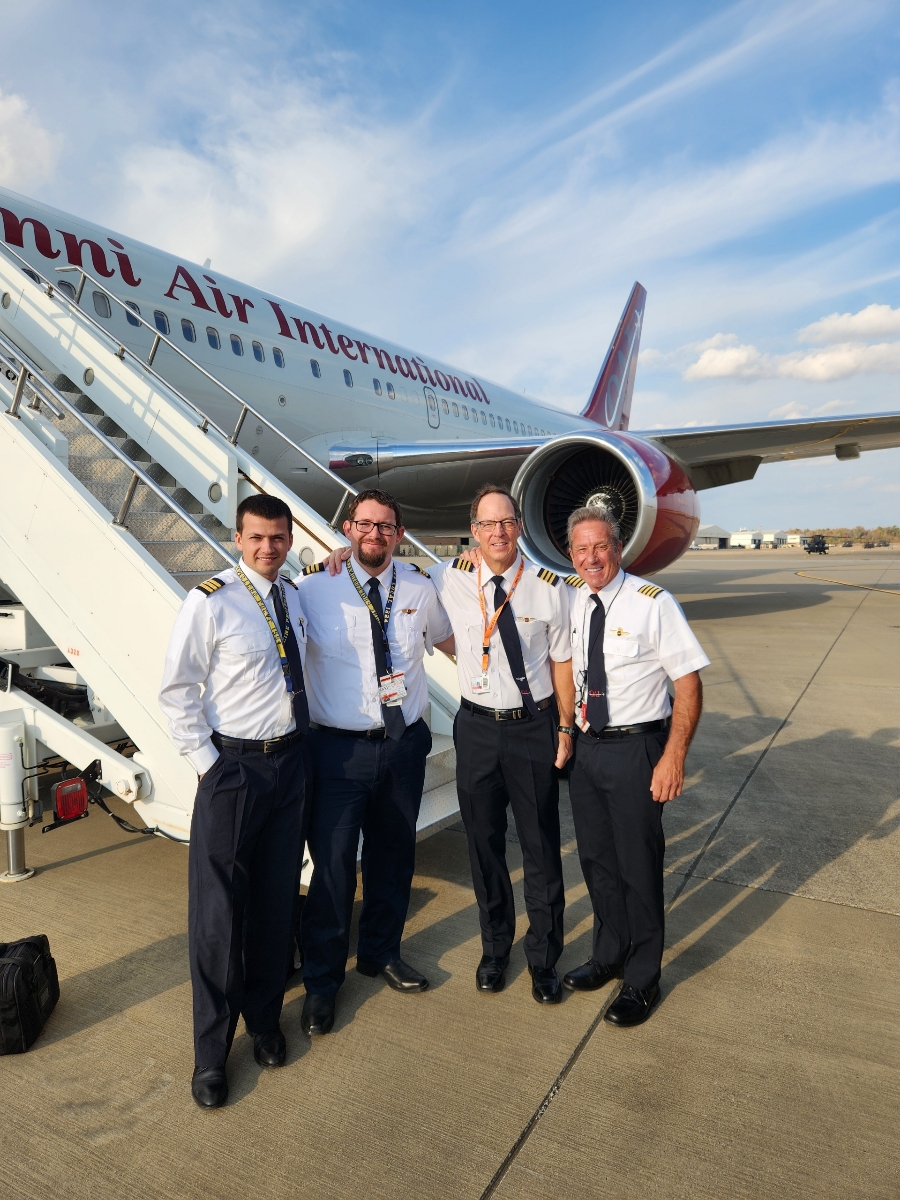
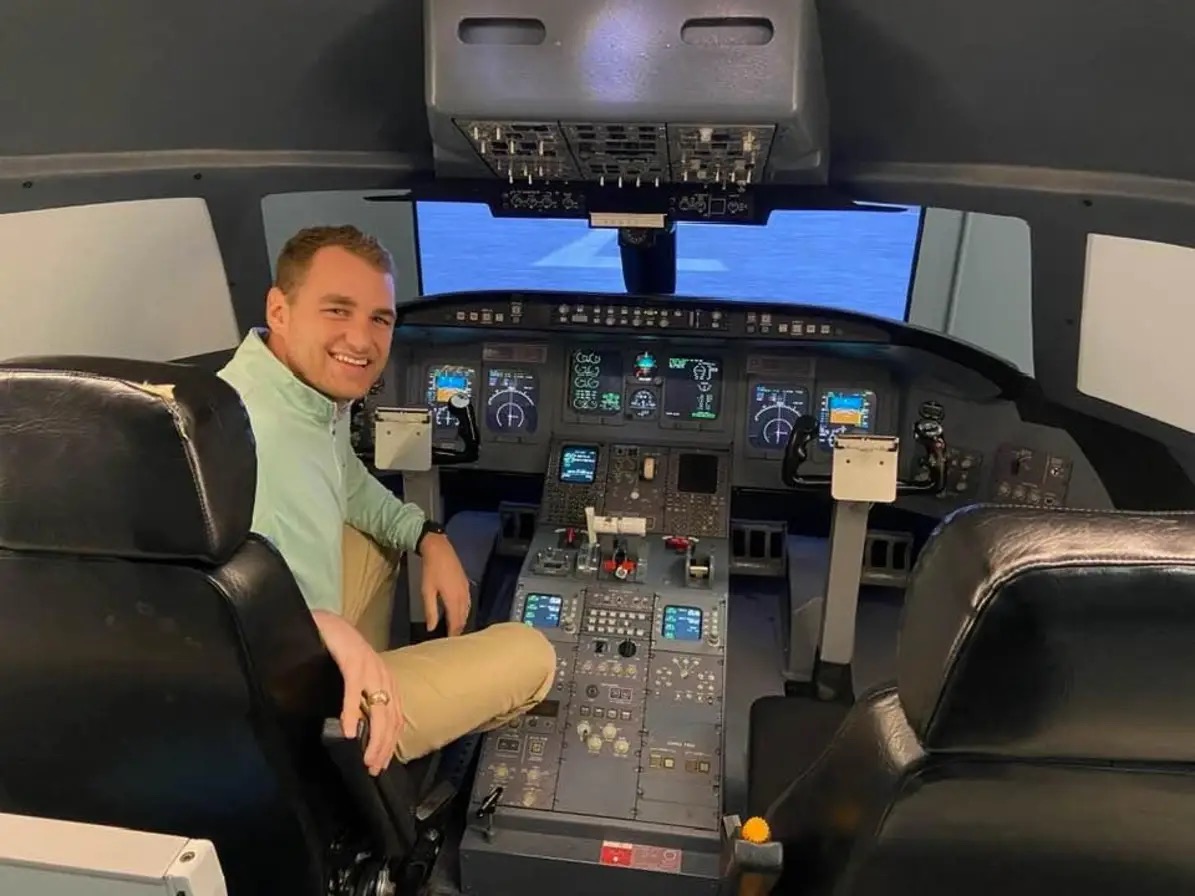
Brian's sons Jack and Michael Parrish co-founded Parrish Aviation Flight Academy together, building on four generations of family aviation heritage. After spending three years as a First Officer at Envoy Air — where he accumulated airline glass-cockpit hours and Boeing 767 type ratings — Jack made the decision to resign from the airline completely and buy out his brother Michael's share of the business, committing fully to building Parrish Aviation into what it is today.
Michael, like his father Brian before him, went on to the major airlines — carrying the family's professional aviation legacy into commercial flight at the highest level. Brian and Michael are both at the majors today.
The fourth generation also includes Thomas — Jack and Michael's brother-in-law — who served as Parrish Aviation's Chief Flight Instructor before transitioning to a career as a SkyWest First Officer. Thomas helped shape the instructional foundation of Parrish Aviation during its formative years, and his standards remain embedded in the school's culture today.

Caleb Parrish
The Next Chapter
The fifth generation of Parrish aviators has already begun. Jack's son Caleb — still a toddler — has already logged quite a few flights, experiencing the family's love of aviation from the earliest age possible. Whether Caleb follows the path of his great-great-grandfather Shorty, the precision aerobatics of his great-grandfather Roger, the fighter jets of his grandfather Brian, or carves out an entirely new chapter in the Parrish aviation story, one thing is certain: the sky is in his blood.
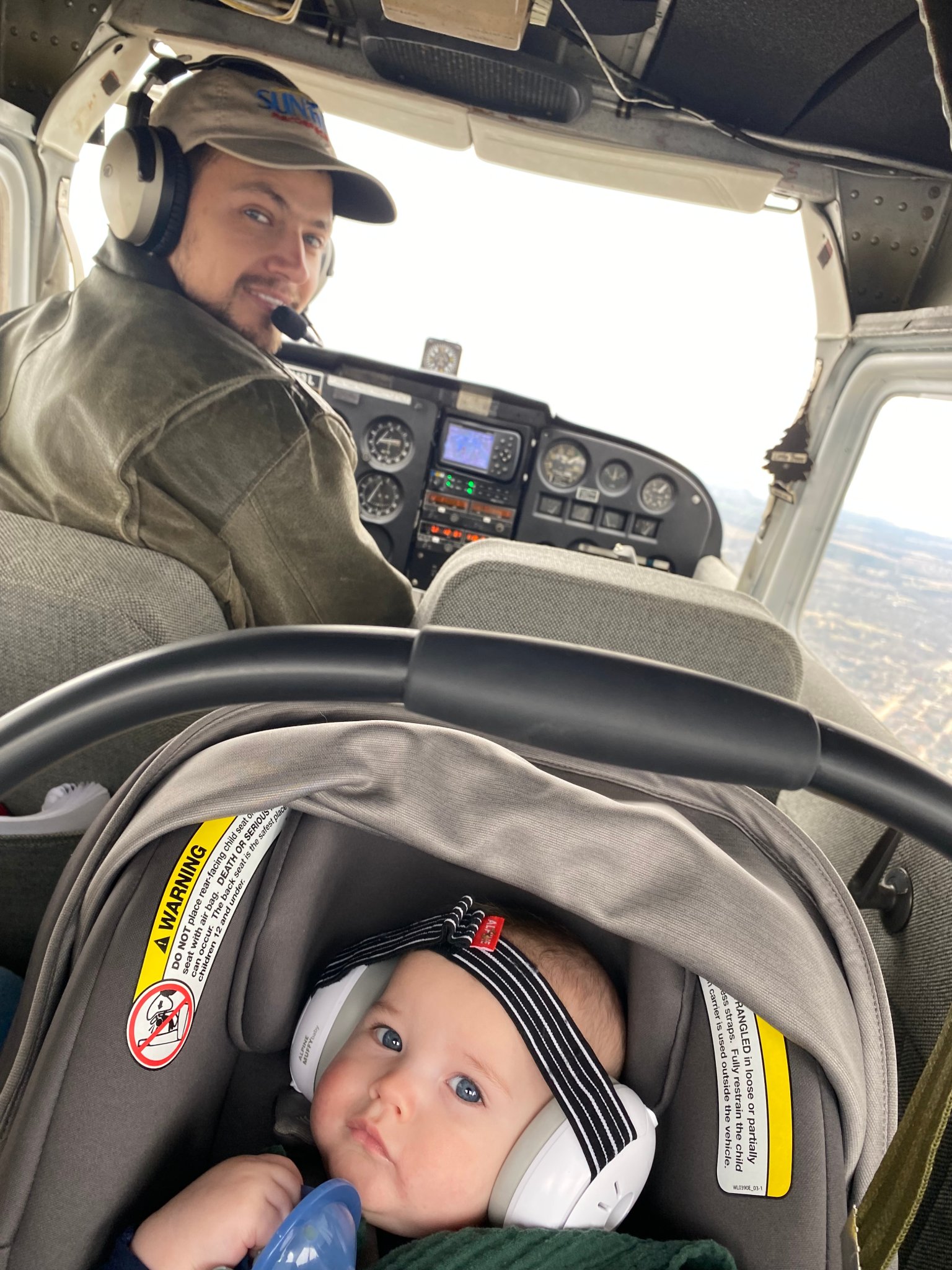
“From an Illinois dairy farm to the Thunderbirds, from F-16s to the airlines, from co-founding a flight school to watching the next generation take their first flights as a toddler — the Parrish family has been living aviation for five generations. That legacy isn't a marketing story. It's the reason Parrish Aviation exists.”


What Jack's Background Means for You
Abstract credentials don't teach. Here's how Jack's specific background translates into concrete advantages for every Parrish Aviation student.
Airline-Grade Standards from Lesson One
Every curriculum at Parrish Aviation reflects the professional standards Jack was trained to as an airline First Officer — checklist discipline, CRM awareness, systems depth, and precision airmanship from day one of PPL training.
B767 Systems Depth in Advanced Courses
Students training for instrument rating, commercial, or multi-engine receive instruction informed by wide-body jet systems knowledge. The depth of understanding Jack brings to autopilot, FMS, and automation concepts is simply unavailable from most civilian CFIs.
Master CFI Mentorship Architecture
The NAFI Master CFI designation reflects a teaching philosophy, not just flight hours. Jack's instructional methodology is systematic, evidence-based, and continuously refined — and he applies those same standards to every CFI he hires.
FAA Part 141 Curriculum Rigor
Jack personally authored and submitted Parrish Aviation's FAA Part 141 training curriculum. The structure, stage checks, and standards in every program reflect his professional airline career, not the FAA minimum.
Airline Interview Coaching
Jack has been through the airline hiring process. His coaching on airline interview preparation, logbook presentation, and the ATP-CTP pathway comes from direct experience — giving career-track students a genuine advantage over competitors who trained with hour-building CFIs.
FSANA Network Access
As a FSANA Board Member, Jack is connected to the leading edge of professional flight training in the U.S. — including emerging safety research, regulatory changes, and industry best practices that flow directly into how Parrish Aviation trains its students.
About Jack Parrish — Frequently Asked Questions
What prospective students, journalists, and pilots ask about Parrish Aviation's founder and chief flight instructor.
Explore Parrish Aviation
Train with Jack's Team at Parrish Aviation
Book a Discovery Flight at Dallas Executive Airport or Hicks Airfield. Meet the instructors, see the Sling NGT glass cockpit fleet, and experience the Parrish Aviation difference firsthand.